Acton Soft Dig: Why Hydrovac Beats a Backhoe
Why vacuum excavation protects Acton GUDI wells, Fairy Lake corridors, and tight core laterals better than exploratory backhoe trenches.
By Neutrino Construction ·
Acton digs start with groundwater, not the bucket
Here is the field reality crews from lake-fed suburbs sometimes miss: Acton runs on groundwater. The urban system draws from municipal well fields (Fourth Line, Prospect Park, Davidson) that sit in a GUDI regime, groundwater under the direct influence of surface water. Treatment is stricter, and every careless hole near Fairy Lake, Black Creek, or the wetland complex is a bigger deal than a routine suburban lateral repair.
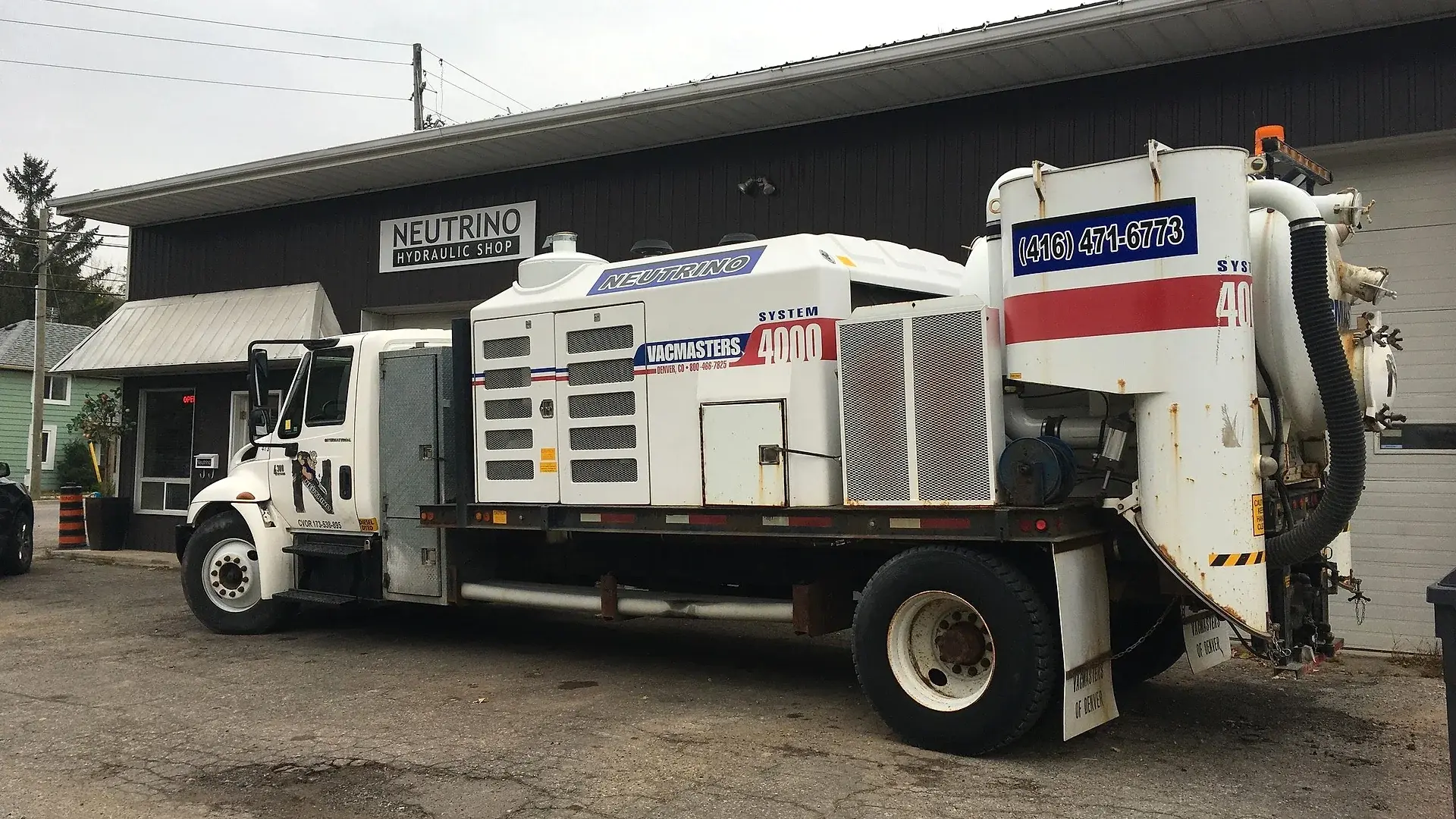
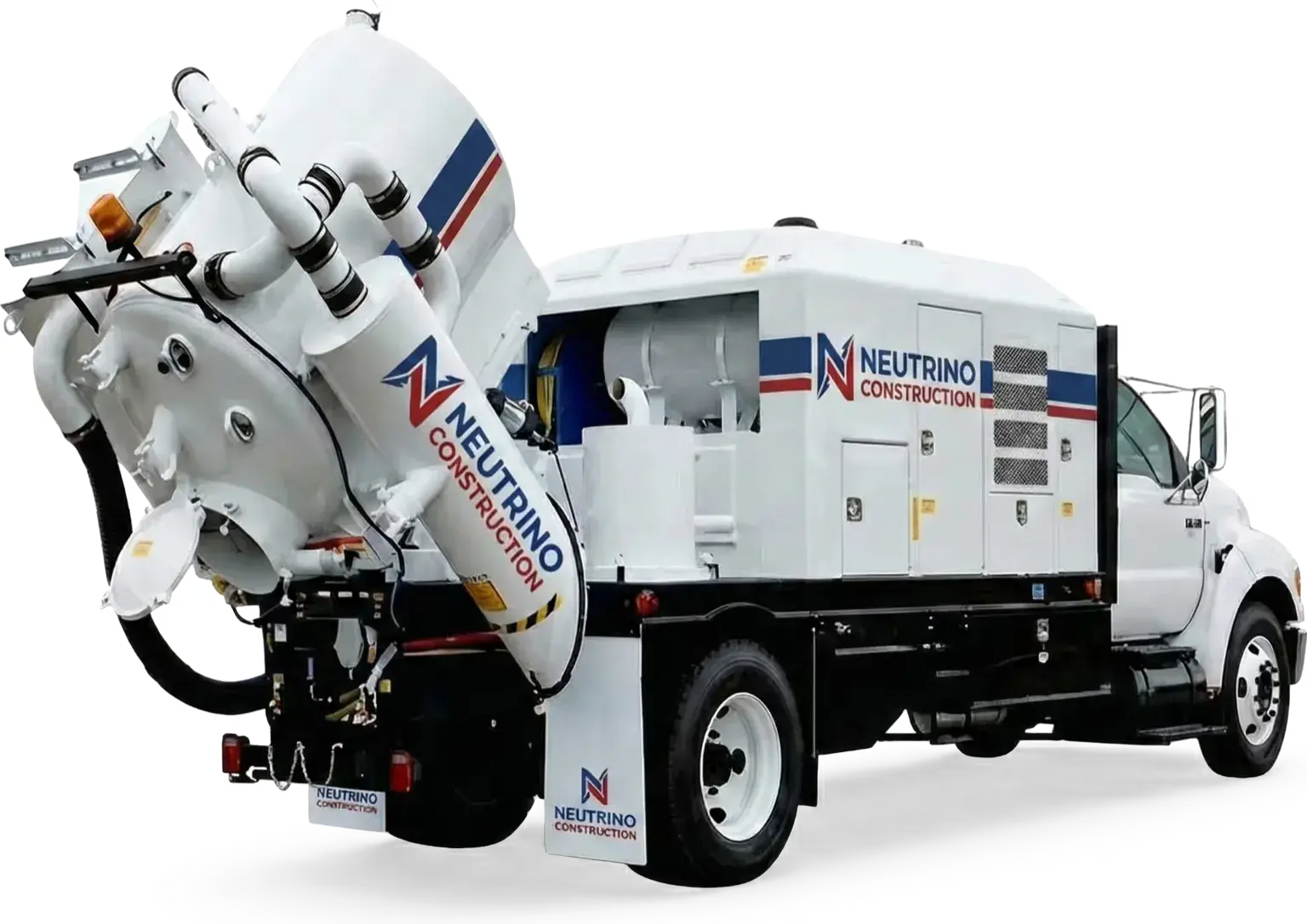
So when a Mill Street service needs exposure or a repair sits near a wellhead protection area, the first question is not how fast the backhoe can roll. It is what happens if we open the wrong pathway. Hydrovac (high-pressure water plus vacuum recovery) exposes the pipe, cable, or valve you actually need without turning a small repair into a source-water headache.
Where open cut hurts more than it helps in Leathertown
Acton's compact core along Mill Street, Main Street South, and the CN/Metrolinx Kitchener corridor leaves almost no staging room. Aging laterals under heritage fabric, GO-station lands, and narrow truck routes on Highway 7 and Regional Road 25 do not forgive exploratory trenches. Rural fringe lots in Esquesing sit on private wells and septics in Wentworth Till over shallow fractured Silurian dolostone: rock refusal a few metres from soft sand and gravel lenses.
- Daylighting gas, water, hydro, and telecom on Highway 7 and Main Street before mechanical dig
- Potholing rail-adjacent utilities where flagging and track windows already limit access
- Exposing well casings, pitless adapters, and septic tanks on rural fringe lots without wrecking landscaping
- Controlled spoils handling near Black Creek floodplain and Credit Valley Conservation regulated lands
“A bucket that works fine on clean clay can destroy a plastic service or nick shallow gas in mixed tannery-era fill. Soft dig first. Mechanical second. Always.”
Soft dig from locates to handoff in Acton
Typical daylighting order in Acton: confirm Ontario One Call and private locates. Walk the path for surface clues (valves, curb boxes, old patches, wet spots). Set containment and spoils handling with Fairy Lake and Black Creek buffers in mind. Soft dig to the utility at grade, document what you found, then hand the pit to mechanical or trenchless only where the plant is known.
Groundwater wells
Water source
GUDI fields
Key classification
Hwy 7 / Main St
Core corridors
In Acton the practical filter is simple: if the dig sits inside or near a wellhead protection area, creek buffer, rail corridor, or dense downtown grid with incomplete as-builts, vacuum first. The decision is rarely vacuum or never dig. It is vacuum first so the backhoe only cuts what is known.
When vacuum first is the smart Acton call
Call for vacuum excavation when work sits near municipal well fields, Fairy Lake and Black Creek corridors, GO/rail edges, or a tight Main Street block with heritage curb lines. Same rule on rural properties where one wrong trench can cut a private water line, septic forcemain, or electrical feed to a barn pump.
If the next step after exposure is a repair or a longer bore, that is a separate conversation about plumbing repair or horizontal directional drilling. Soft dig earns its keep by making that next step boringly predictable.
Common Questions
Why is hydrovac preferred near Acton municipal well fields?
Urban Acton runs on GUDI groundwater wells (Fourth Line, Prospect Park, Davidson). Soft dig near wellhead protection areas, Fairy Lake, and Black Creek reduces uncontrolled open-cut pathways into sensitive source water compared with exploratory backhoe trenches.
Does Acton's compact core change how utility digs should start?
Yes. Mill Street, Main Street South, and the CN/Metrolinx Kitchener corridor leave little staging room. Daylighting gas, water, hydro, and telecom at grade before mechanical dig protects heritage laterals and busy truck routes on Highway 7 and Regional Road 25.
Is hydrovac useful on rural fringe lots outside Acton's urban boundary?
Yes. Esquesing-edge properties on private wells and septics in Wentworth Till over shallow dolostone benefit from controlled exposure of casings, pitless adapters, and forcemains without wrecking landscaping or mixed fill.
Do I still need Ontario One Call if I use hydrovac in Acton?
Yes. Locates remain required. Hydrovac confirms marks at grade; it does not replace the legal locate process before digging or drilling.
Can hydrovac work in Acton winters around frozen laterals?
Yes. Freeze-thaw on moraine ground freezes services solid. Controlled hydro excavation around frozen laterals and catchbasins is usually safer than ripping brittle mains with a bucket tooth.
When should Acton digs still use a backhoe after hydrovac?
After plant is exposed and documented, mechanical excavation can finish known work efficiently. Vacuum first near wellheads, creek buffers, rail edges, and dense incomplete as-builts; mechanical only on confirmed paths.
What spoils issues matter near Fairy Lake and Black Creek?
Slurry and spoil need containment so vacuum work does not push sediment or contaminants toward creeks, wetlands, or GUDI well fields. Spoils handling is part of method choice, not an afterthought.
Services That Help in Acton
Request a QuoteMore Local Guides
Hydrovac in a Busy Downtown Guelph Rebuild
How soft dig daylighting keeps utility exposures controlled amid downtown Guelph rebuild congestion and stacked plant.
Why Milton Contractors Call for Hydrovac First
Hydrovac-first daylighting in Milton growth corridors as Boyne matures and Britannia moves toward roughly 17,500 units.
Finding Hidden Water Leaks on Acton Main Street
How acoustic leak detection finds hidden water loss on hard Acton mains before crews open a precise pit on Main Street or Mill Street.
Working in Acton?
Based in Acton, we run trenchless, excavation, and utility crews across Halton Hills, Milton, Guelph, and nearby towns. Tell us what is underground (or what should be).