Finding Hidden Water Leaks on Acton Main Street
How acoustic leak detection finds hidden water loss on hard Acton mains before crews open a precise pit on Main Street or Mill Street.
By Neutrino Construction ·
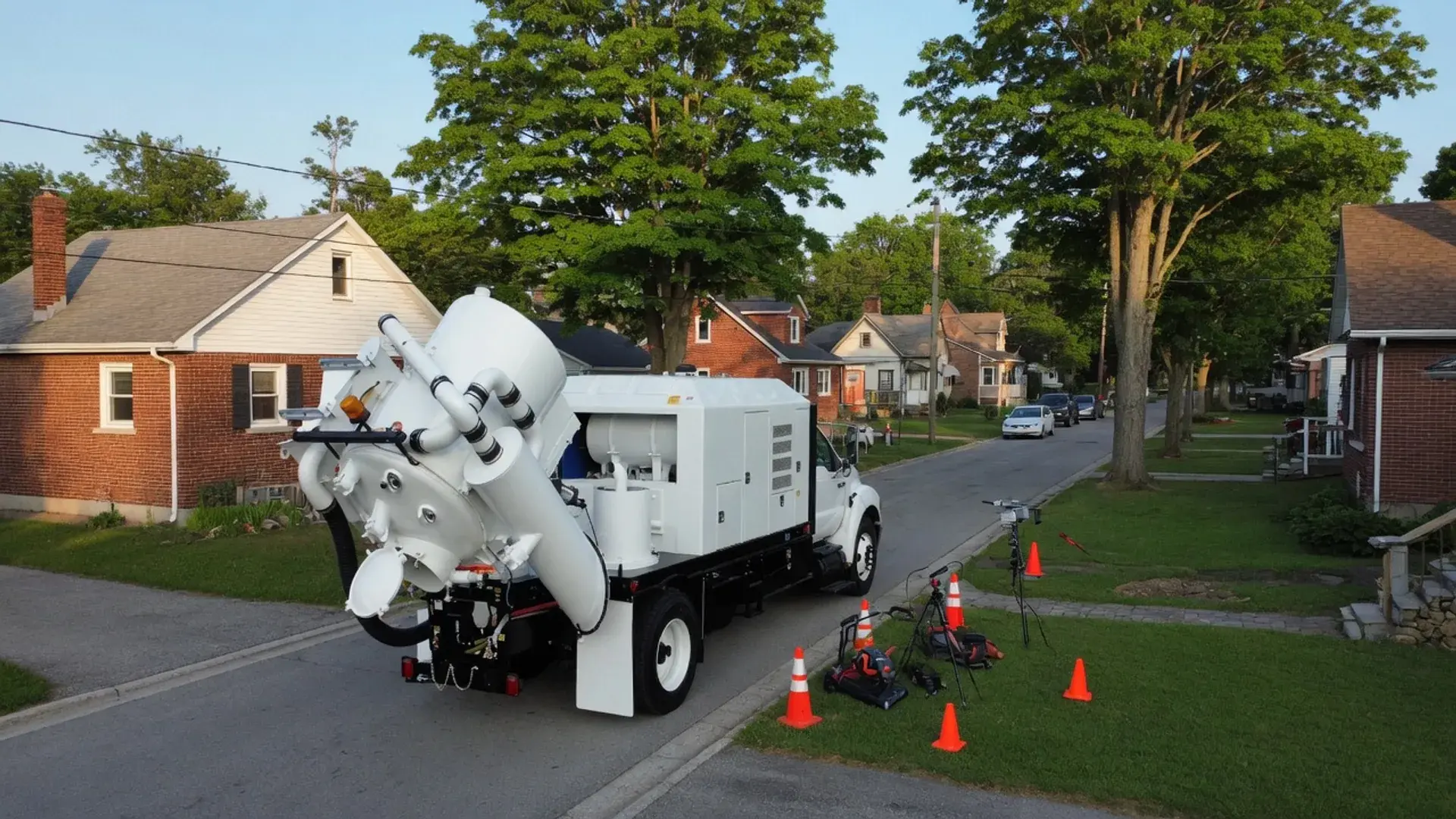
Why Acton leaks hide under hard water and tight streets
Municipal Acton water is commonly hard, and Prospect Park has historically carried elevated iron and manganese. Scale, joint wear, and aging cast-iron or early plastic distribution raise the odds of private-side leaks and main breaks. In a compact core along Main Street and Mill Street, a silent leak can run under pavement, parking, and heritage curb lines long before a geyser shows up on the road.
That is where acoustic leak detection earns its keep. Instead of exploratory trenches every few metres, a competent crew listens first, correlates sound and pressure clues, and narrows the hot zone so the open cut (or soft dig) is a small, intentional pit.
Hard groundwater
Typical water character
Acoustic locate
Leak method first
One dig, once
Core repair goal
What acoustic work looks like on a tight Acton block
Before the headphones go on in Acton: valve boxes that still open, hydrant spacing, private meter pits, recent pavement patches, and wet basements that never quite dry. Traffic on Highway 7 and Regional Road 25 adds noise, so night or early-morning windows often produce cleaner signals than a noon rush.

- Contact listening on valves, hydrants, and curb stops along Main Street and Mill Street
- Correlation across a block when the main is continuous enough to carry sound
- Private-side checks when the meter and house plumbing are the real noise makers
- Mark-out that a repair crew (and soft dig if needed) can trust the same morning
“Hard water does not invent leaks by itself. It accelerates joint wear and scale that make old joints less forgiving when pressure swings or frost heave moves the trench.”
Hard water clues homeowners can actually use
Treat unexplained water use and soft wet spots in Acton as a locate problem first, not a dig problem. Homeowners on private wells at the fringe see related symptoms (pressure drop, cloudy water after pump cycles, soft ground over a service), but downtown customers on municipal supply often notice only a rising bill or a neighbour's soggy boulevard.
A useful Acton leak call runs like this: gather use and pressure history, isolate private vs public responsibility where possible, run acoustic survey on accessible fittings, mark the best pit location, then repair with the smallest open cut that still lets a durable joint go in. Soft dig can support that pit when plant is congested, but the primary win is knowing where to dig.
When leak detection should come before any trench
Call acoustic leak detection when you have unexplained water loss, chronic wet spots near mains or services, or a planned curb and sidewalk rebuild that should not start with guesswork. Near Fairy Lake and Black Creek, unaccounted-for water and muddy construction spoil are especially unwelcome, so a tight locate-then-repair sequence protects both the street and the corridor.
Once the leak is pinned, the repair itself is plumbing work: joint, clamp, service replacement, or a short main section. Vacuum excavation helps open a tight pit, but it is not a substitute for finding the noise first.
Common Questions
Why do water leaks hide under Acton Main Street and Mill Street?
Compact heritage fabric, older mains and laterals, hard groundwater chemistry, and busy hardscape hide wet spots and dampen early surface clues. Acoustic detection listens for pressurized escape before crews open a precise pit.
What homeowner symptoms suggest acoustic leak detection in Acton?
Unexplained high usage, running meters when fixtures are off, soft or wet patches along the service path, low pressure, or recurring wet basements after dry weather all justify non-invasive listening before exploratory trenching.
Does hard Acton water affect leak detection and pipe life?
High hardness is common on municipal well water and can contribute to scale, joint stress, and material wear. Detection still targets the sound of pressurized escape; chemistry helps explain why older laterals fail more often.
Should leak detection come before hydrovac or open repair on Main Street?
Usually yes. Mark the highest-probability zone first, then open one controlled pit (often with hydrovac near other utilities) so repair does not chase noise along the whole block.
Can acoustic work help near Fairy Lake and Black Creek corridors?
Yes. Source-water and conservation constraints make unnecessary open-cut especially costly. Narrowing the dig zone protects hardscape, traffic, and environmentally sensitive edges.
Will leak detection give an exact repair price on the first visit?
It marks the best dig zone and informs scope. Final repair cost still depends on depth, pipe material, surface restoration, and what is confirmed once the line is exposed.
Does downtown traffic noise ruin acoustic surveys?
Noise complicates surveys, which is why quieter windows and multiple listening points matter. Good correlation still beats opening pavement on a hunch.
Services That Help in Acton
Request a QuoteMore Local Guides
Downtown Guelph Pipes and Leak Detection First
Why acoustic leak detection is the smart first step on downtown Guelph clay pipes about 90 years old amid DTIRP construction pain.
Find Georgetown Water Leaks Without the Tear-Up
Acoustic leak detection for dense downtown Georgetown heritage streets so crews open one precise pit instead of a block-long tear-up.
Acton Soft Dig: Why Hydrovac Beats a Backhoe
Why vacuum excavation protects Acton GUDI wells, Fairy Lake corridors, and tight core laterals better than exploratory backhoe trenches.
Working in Acton?
Based in Acton, we run trenchless, excavation, and utility crews across Halton Hills, Milton, Guelph, and nearby towns. Tell us what is underground (or what should be).