Downtown Guelph Pipes and Leak Detection First
Why acoustic leak detection is the smart first step on downtown Guelph clay pipes about 90 years old amid DTIRP construction pain.
By Neutrino Construction ·
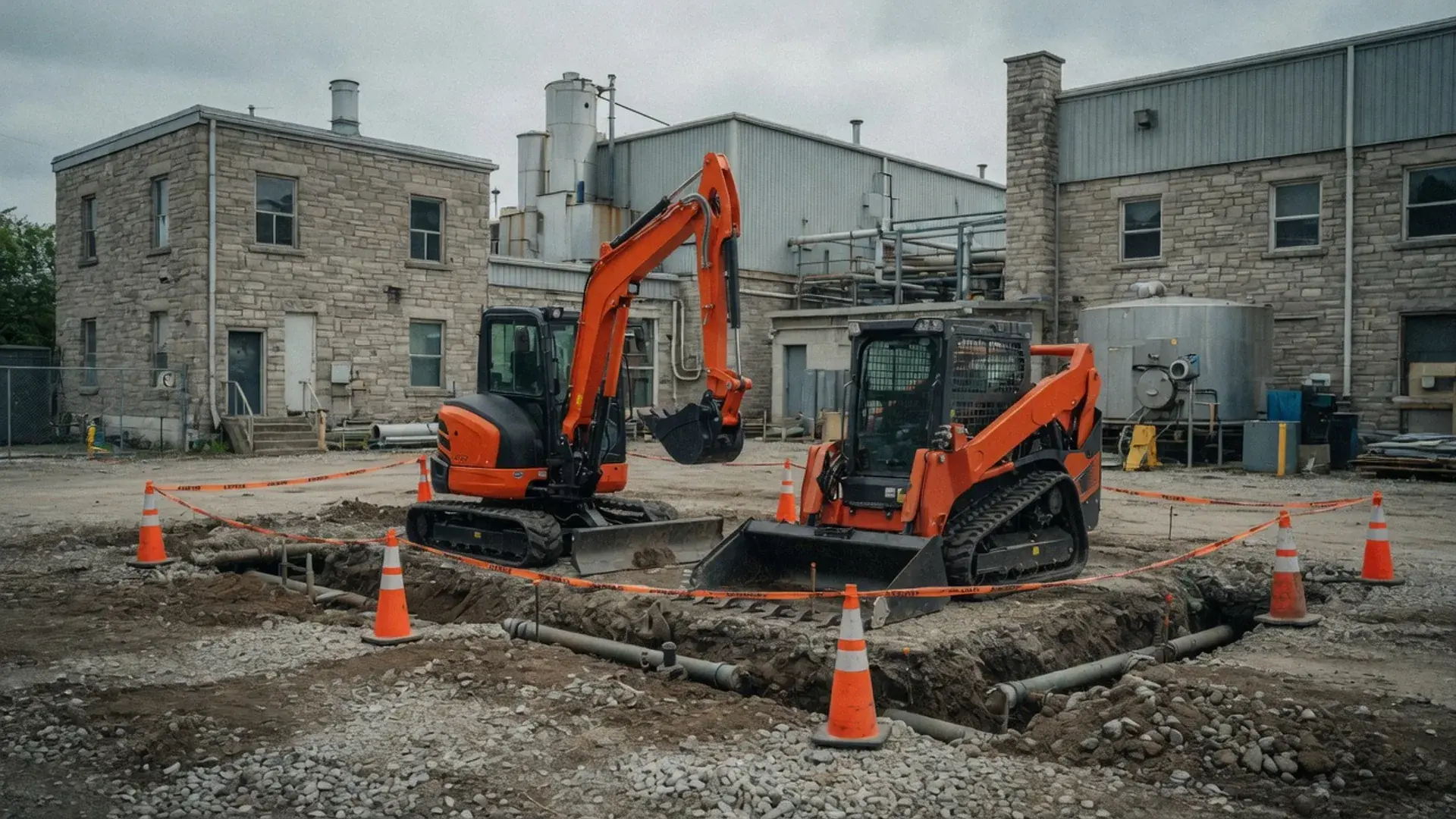
Downtown rebuild years make wrong digs extra expensive
Guelph's Downtown Infrastructure Renewal Program (DTIRP) has put multi-year construction pain on the map for businesses and residents: roads open, roads closed, and utilities older than living memory. Much of the downtown network still runs on clay pipe around 90 years old. When water shows up where it should not, the smart first move is still acoustic leak detection, not a hopeful trench through a block already living on detours.
Whether the eventual repair is municipal, private-side, or shared at the property line, finding the leak before you dig still saves downtown Guelph from another exploratory trench during rebuild season.
~90 years
Downtown pipe age (order)
DTIRP
Public program
Acoustic locate
First step
Why clay and congestion change the listening plan
Downtown Guelph listening starts with valve access under construction fencing, temporary services, noisy rebuild traffic, and whether the symptom is private plumbing or street-side. Older clay and mixed materials transmit sound differently than new plastic. Correlators, contact listening, and isolation checks earn their keep when the street already has three contractors and one remaining parking stall.

- Listening surveys timed around construction noise where possible
- Private-side checks for basements taking water near Macdonell, Wyndham, Quebec, and side streets
- Mark-outs that repair crews can trust amid shifting work zones
- Coordination awareness so a locate does not fight an active pour or paving window
“During DTIRP years, assume the block is already tired of excavators. Prove the leak location before you add another scar.”
From acoustic mark to a durable plumbing repair
Downtown Guelph leak problem, practical order: gather symptoms and any known main work nearby. Run acoustic methods to narrow the zone. Separate private plumbing failures from distribution clues. Repair with the smallest opening that still allows a durable joint, clamp, or service replacement. Soft dig can help in congested plant, but finding the leak location first is still what keeps the repair small.
Business owners feel every extra day of sidewalk closure. Pinpoint work is customer-service culture as much as engineering culture.
When to call before the next detour multiplies
Call for leak detection when you see unexplained water use, chronic basement seepage near older mains, or wet sidewalks that are not just poor drainage. During rebuild years, early private-side diagnosis also prevents blaming municipal work for a house problem or the reverse.
Hydrovac and larger civil packages have their place in the downtown program. For the leak itself, start with listening. That is how ~90-year plant gets honest repairs without turning every symptom into a block-long tear-up.
Common Questions
Why prioritize acoustic leak detection during downtown Guelph rebuild years?
DTIRP-era congestion and detours make wrong digs extraordinarily expensive. Listening first targets one repair pit instead of exploratory trenches through clay-era plant and active construction traffic.
How old are many downtown Guelph pipes and why does that matter?
Much of the downtown network still runs on clay pipe around 90 years old. Age plus congestion rewards non-invasive screening before mechanical commitment.
What symptoms should Guelph property managers watch for?
Unexplained water loss, wet basements or sidewalks, pressure complaints, and meter anomalies. Document timing relative to nearby construction when possible.
Should leak detection precede hydrovac on downtown Guelph blocks?
Typically yes. Mark the zone, then soft dig for confirmation near stacked utilities so repair stays surgical amid rebuild traffic.
Can detection still work with downtown ambient noise?
Noise is a real factor. Crews select listening points and timing to improve correlation and set expectations when conditions are harsh.
How does this hand off to water main or service repair?
Once marked and exposed, plumbing repair proceeds with known location, limiting open time on constrained downtown streets.
Why assume the block is already tired of excavators?
Multi-year DTIRP disruption has already burned neighbour patience. Prove the leak location before adding another scar to a rebuild corridor.
Services That Help in Guelph
Request a QuoteMore Local Guides
HDD for Guelph Industrial and Arterial Crossings
Horizontal directional drilling for Guelph industrial parks and arterial crossings when open cut would stall traffic and production.
Hydrovac in a Busy Downtown Guelph Rebuild
How soft dig daylighting keeps utility exposures controlled amid downtown Guelph rebuild congestion and stacked plant.
Find Georgetown Water Leaks Without the Tear-Up
Acoustic leak detection for dense downtown Georgetown heritage streets so crews open one precise pit instead of a block-long tear-up.
Working in Guelph?
Based in Acton, we run trenchless, excavation, and utility crews across Halton Hills, Milton, Guelph, and nearby towns. Tell us what is underground (or what should be).