Find Georgetown Water Leaks Without the Tear-Up
Acoustic leak detection for dense downtown Georgetown heritage streets so crews open one precise pit instead of a block-long tear-up.
By Neutrino Construction ·
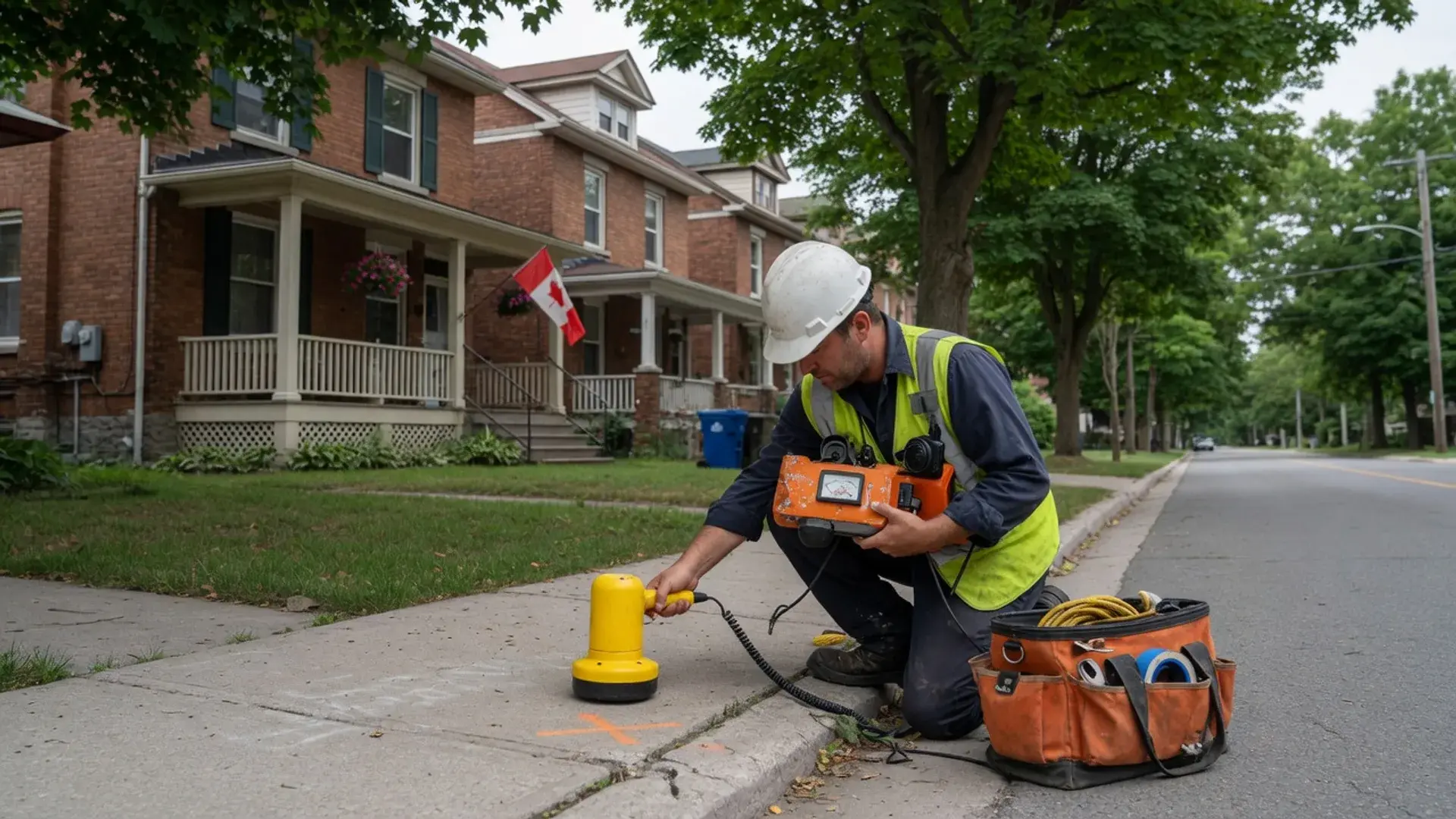
Downtown Georgetown is a terrible place to dig twice
Guelph Street, Main Street South, and the tight blocks around downtown Georgetown stack aging water plant under heritage storefronts, on-street parking, and a street grid that never planned for modern excavators. A main-side leak that would be a simple dig in a wide suburban boulevard becomes a multi-day disruption if you guess wrong. Acoustic leak detection exists so the first trench is the only trench.
Public investment and growth pressure around the GO station and Mill Street area only raise the cost of exploratory tear-up. Whether the water is still on historic well fields or shifting toward lake-based feed in growth pockets, lost water and torn pavement are still local problems with local business impacts.
Dense heritage core
Street type
Acoustic survey
First step
One precise pit
Dig goal
How acoustic surveys work on busy heritage blocks
On a Georgetown block, check valve and hydrant access, recent patches, basement seepage reports from adjacent buildings, and traffic patterns that will drown or help a listening window. Contact microphones on fittings, correlators across a main segment, and private-side isolation checks all play a role when the street is noisy and the plant is old.

- Night or early-morning listening when Guelph Street traffic is lighter
- Correlation across continuous main segments where fittings allow
- Private plumbing checks so a house-side toilet is not blamed on the main
- Mark-outs that soft dig or open cut crews can use the same day
“If you can hear a Georgetown leak in a basement before you hear a plan, you waited too long to survey the street.”
From mark-out to a durable plumbing repair
Downtown Georgetown leak response: confirm symptoms and any SCADA or customer-use clues the municipality or owner can share. Run the acoustic survey and refine the hot zone. Soft dig when plant congestion or shallow telecom makes a blind bucket risky. Complete the plumbing repair (clamp, joint, service, or short main section) with a restore that matches curb, sidewalk, and asphalt constraints.
Finding the noise first is still what keeps the repair small. Vacuum and mechanical excavation only earn their keep once the mark is trustworthy.
When to call before the street fails
Call acoustic leak detection for unexplained water loss, chronic wet basements near mains, or ahead of planned streetscape work where knowing leak locations prevents digging the same block twice. Growth and corridor work near the GO station make coordination harder, not easier, so early locate work pays off.
If the leak is private-side, the fix stays in plumbing. If it is main-side, the survey still saves the downtown from an exploratory trench parade.
Common Questions
Why is exploratory trenching especially costly in downtown Georgetown?
Heritage streets, dense plant, parking, and finished hardscape mean a wrong dig multiplies restoration and disruption. Acoustic mark-out aims for one precise pit instead of a block-long tear-up.
What symptoms point to a Georgetown water service or main leak?
Unexplained consumption, hissing or wet patches, pressure loss, and meter movement with fixtures off are classic triggers for non-invasive detection before mechanical exploration.
Can acoustic detection work under Georgetown driveways and sidewalks?
Yes, the survey is non-invasive at the listening stage. Repair still needs a targeted opening, often coordinated with hydrovac when other utilities crowd the same corridor.
Should leak detection come before hydrovac confirmation in Georgetown?
Usually. Listen and mark first, then soft dig at the high-probability zone so confirmation and repair stay tight on heritage blocks.
Does downtown noise reduce leak detection accuracy?
Ambient traffic and construction noise can complicate surveys. Crews choose listening points and timing windows so the mark-out stays useful on a busy Georgetown block.
How does this sequence hand off to plumbing repair?
Once the zone is marked and exposed, water main or service repair proceeds with known location, reducing open time on the street and limiting surface rebuild.
Why do heritage curb lines raise the cost of a wrong dig?
Brick, stone, and specialty sidewalks cost more to match than plain suburban concrete. Pinning the leak first protects both water and the street fabric.
Services That Help in Georgetown
Request a QuoteMore Local Guides
GO Station Corridor Utility Crossings in Georgetown
How trenchless drilling and soft dig discipline fit Georgetown GO and Mill Street intensification without careless open-cut chaos.
Downtown Guelph Pipes and Leak Detection First
Why acoustic leak detection is the smart first step on downtown Guelph clay pipes about 90 years old amid DTIRP construction pain.
Private Wells on Campbellville Escarpment Estates
How estate-lot private wells work around Campbellville when only a tiny pocket has municipal supply and most homes stay on their own water.
Working in Georgetown?
Based in Acton, we run trenchless, excavation, and utility crews across Halton Hills, Milton, Guelph, and nearby towns. Tell us what is underground (or what should be).