GO Station Corridor Utility Crossings in Georgetown
How trenchless drilling and soft dig discipline fit Georgetown GO and Mill Street intensification without careless open-cut chaos.
By Neutrino Construction ·
Intensification raises the cost of a sloppy crossing
Georgetown's GO station area and Mill Street corridor keep adding housing and commerce pressure along the rail edge. Official Plan work around the station precinct (including OPA 63 timing through 2026, with secondary plan pieces still moving) means denser blocks, more buried services, and less patience for week-long open cuts.
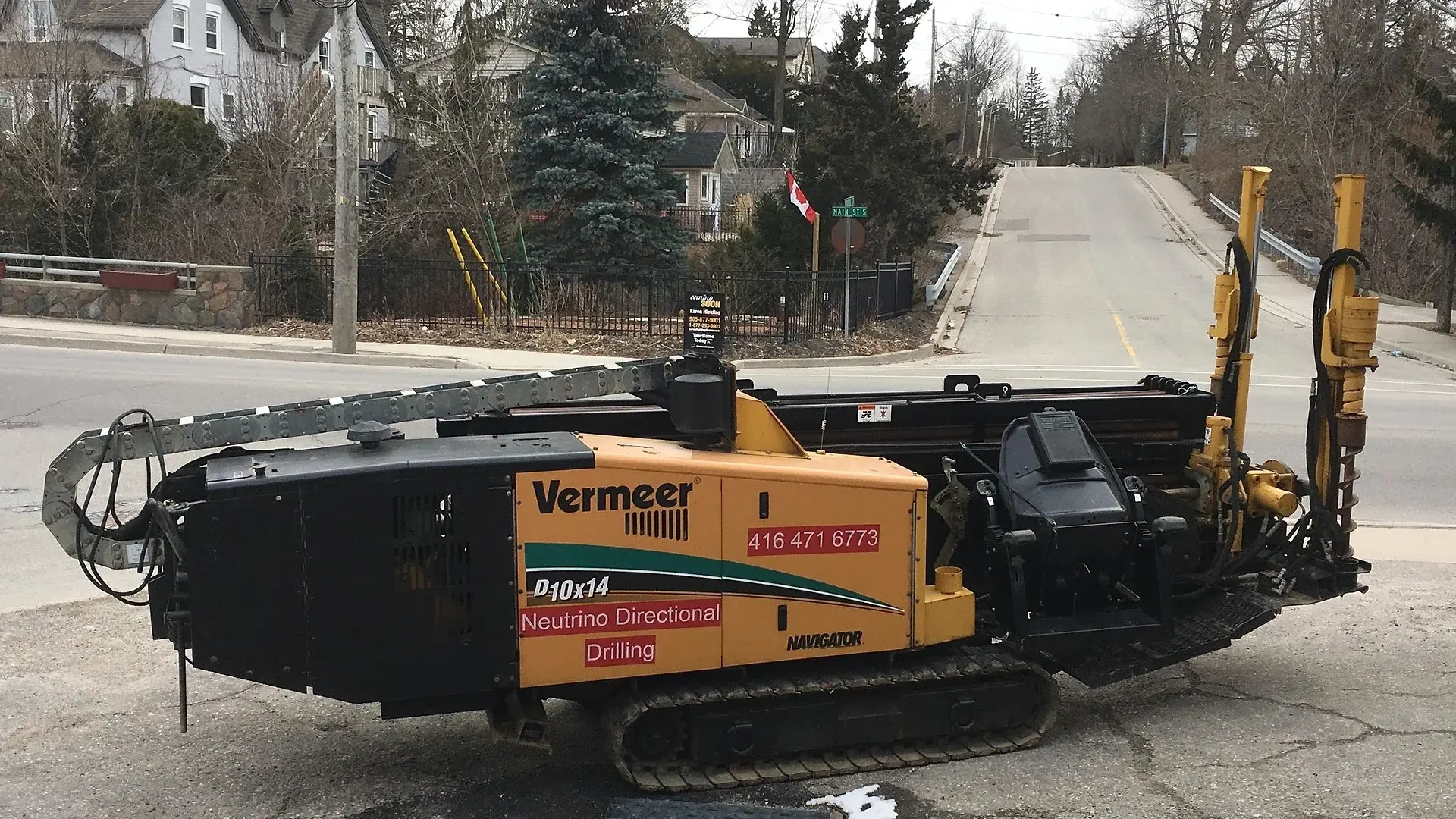
What that growth means on the ground is a method problem: horizontal directional drilling for longer crossings, hydrovac daylighting before bits and buckets move, and staging that respects rail, bus, and downtown traffic realities.
GO / Mill Street
Corridor focus
HDD
Preferred long cross
Hydrovac
Preferred exposure
Why daylighting is non-negotiable near rail and downtown plant
Near the Georgetown station corridor: stacked utilities, incomplete as-builts, rail-adjacent flagging needs, and pedestrian desire lines that will not wait for your trench. Soft dig confirms Ontario One Call marks at grade so a pilot hole or mechanical pit does not invent a strike report on a busy day.

- Potholing gas, water, hydro, and telecom at entry, exit, and mid-path conflict points
- HDD under roads and features where open cut would freeze station-area traffic
- Spoils and slurry control on tight lots with limited laydown
- Work windows planned around peak GO parking and downtown deliveries
“Corridor order that holds: locate, daylight, bore or repair, restore. Skipping daylighting to save an hour is how you lose a week.”
HDD when the surface is more valuable than the dirt
Horizontal directional drilling shines when a fibre, gas, electrical, or water crossing must pass under a road, parking field, or landscaped edge without a full-width trench. Mixed fill near older industrial and rail-adjacent parcels can include brick, ash, and unexpected voids. That is another reason soft dig at risk points is part of the drill package, not a separate luxury.
Near the GO corridor, design the bore for congestion and incomplete records. Assume the as-built is optimistic until daylighting proves otherwise.
What property owners and builders should ask for
If you are building or renovating near the station precinct, ask contractors how they will confirm existing plant, how they will cross roads without multi-day closures, and how spoils leave the site. Competent answers mention locates, hydrovac, and trenchless options before they mention the biggest excavator on the yard.
Short plumbing repairs may still need a small open pit. Long crossings and congested exposures should default to drilling plus vacuum discipline. That is how corridor work stays compatible with a denser Georgetown.
Common Questions
Why are utility crossings near the Georgetown GO corridor higher risk?
Rail operations, stacked plant, Mill Street intensification, and limited work windows raise the cost of a strike or long open-cut closure. Daylighting and trenchless methods protect schedule and safety.
When is HDD the right tool for Georgetown corridor crossings?
When the surface (road, rail-adjacent land, finished commercial frontage) is more valuable than the dirt under it, and alignment can stay clear of confirmed plant at design depth.
Is hydrovac daylighting non-negotiable near rail and downtown plant?
It is the preferred first exposure method when marks are dense or incomplete. Visual confirmation at grade beats trusting paint alone before boring or mechanical dig.
What should builders ask before crossing utilities in intensified Georgetown blocks?
Ask for current locates, daylighting at critical points, bore path drawings, permit status, and a restore plan that matches municipal and rail-adjacent constraints.
Can property owners hire HDD without a full civil package?
Yes. Standalone trenchless installs and soft dig support are available when scope, access, and permits fit. Larger multi-trade packages can be coordinated when needed.
Do rail or municipal permits add time to Georgetown crossings?
Often yes. Corridor authorities may require reviews, traffic or track protection, and specific work windows. Early coordination avoids mobilization surprises.
Is a secondary plan the same as a dig permit on station-area lots?
No. Long-range station-area plans set where growth goes. Day-to-day utility work still needs locates, traffic plans, and a method that matches the dirt and the street in front of you.
Services That Help in Georgetown
Request a QuoteMore Local Guides
Find Georgetown Water Leaks Without the Tear-Up
Acoustic leak detection for dense downtown Georgetown heritage streets so crews open one precise pit instead of a block-long tear-up.
HDD for Guelph Industrial and Arterial Crossings
Horizontal directional drilling for Guelph industrial parks and arterial crossings when open cut would stall traffic and production.
HDD Under Busy Milton Growth Arterials
Horizontal directional drilling for Milton arterial and creek crossings while Boyne and Britannia-area growth keeps traffic pressure high.
Working in Georgetown?
Based in Acton, we run trenchless, excavation, and utility crews across Halton Hills, Milton, Guelph, and nearby towns. Tell us what is underground (or what should be).