HDD in Halton Hills: Faster Restores, Less Digging
How horizontal directional drilling fits Halton Hills Escarpment geology and three job surfaces without open-cut chaos on arterials.
By Neutrino Construction ·
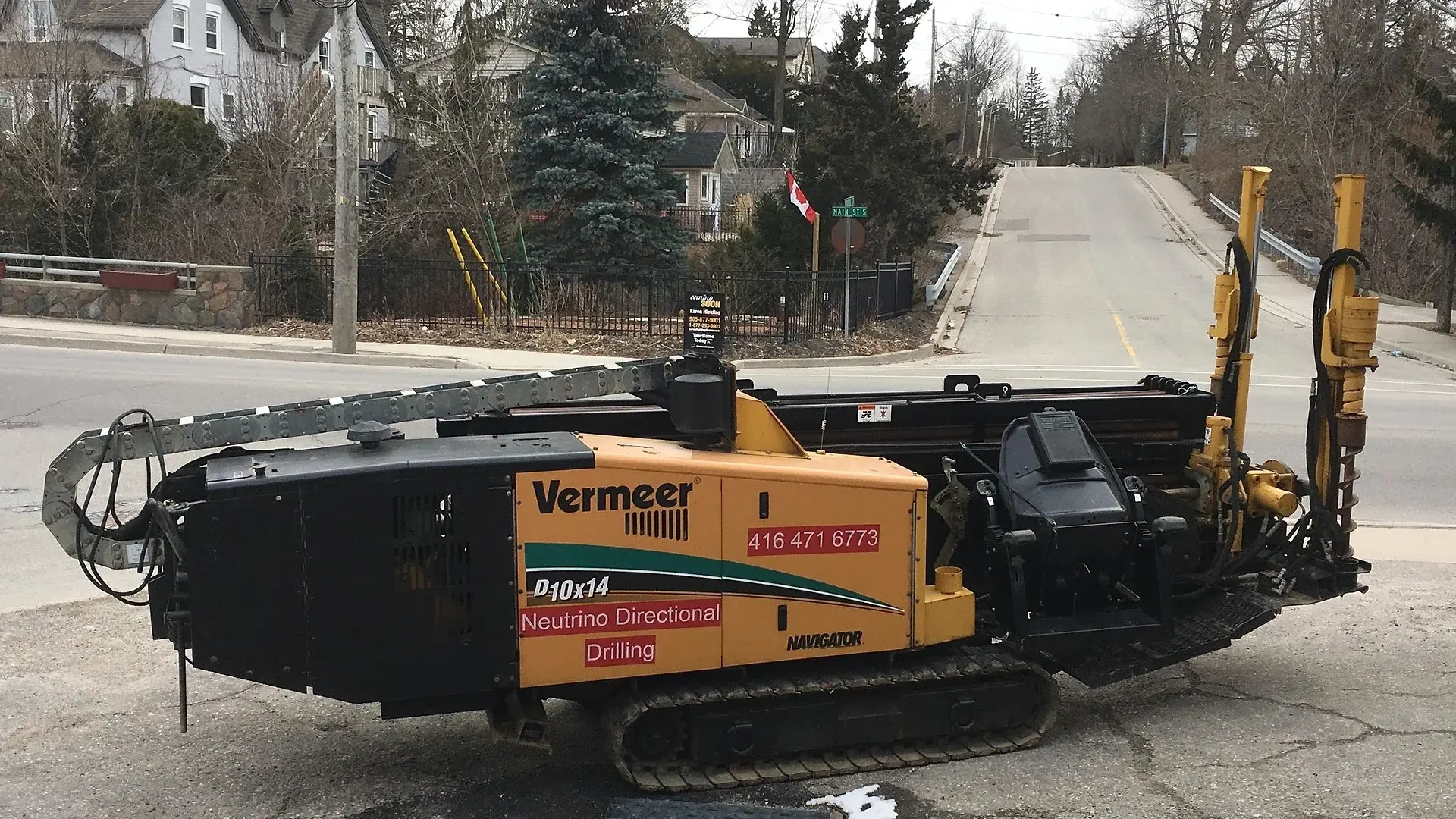
One municipality. Three job surfaces. One trenchless method.
Halton Hills is not one downtown market with a single soil report. It is Acton and Georgetown as compact urban service centres, the Premier Gateway employment belt along Steeles Avenue north of Highways 401 and 407, and a wide rural-urban fringe still on private wells and septics. Horizontal directional drilling is how you thread fibre, gas, water, and electrical installs under arterials, industrial lots, and Escarpment-edge tree cover without treating every corridor like an open trench.
Growth is channelled into planned communities and employment absorption rather than sprawl across Greenbelt and Niagara Escarpment lands. That still means new crossings, interim servicing, and tight restores on Trafalgar, Winston Churchill, Eighth Line, and the Highway 7 / Guelph Street corridor linking Acton and Georgetown.
Acton + Georgetown
Urban cores
Premier Gateway
Employment belt
HDD restores
Method focus
Escarpment geology is not optional fine print
East and below the Escarpment brow, Ordovician Queenston red shales sit under thick Halton Till (often more than 15 metres of clay-rich glacial sediment). West and above the brow, Silurian Amabel dolomites and Horseshoe Moraine ridges put harder rock and boulder-rich overburden in the pilot hole. South of Georgetown, till can thin. Moraine country west of the face can refuse conventional tooling. Bore design has to change with that step, not with a mud program copied from a flat subdivision.
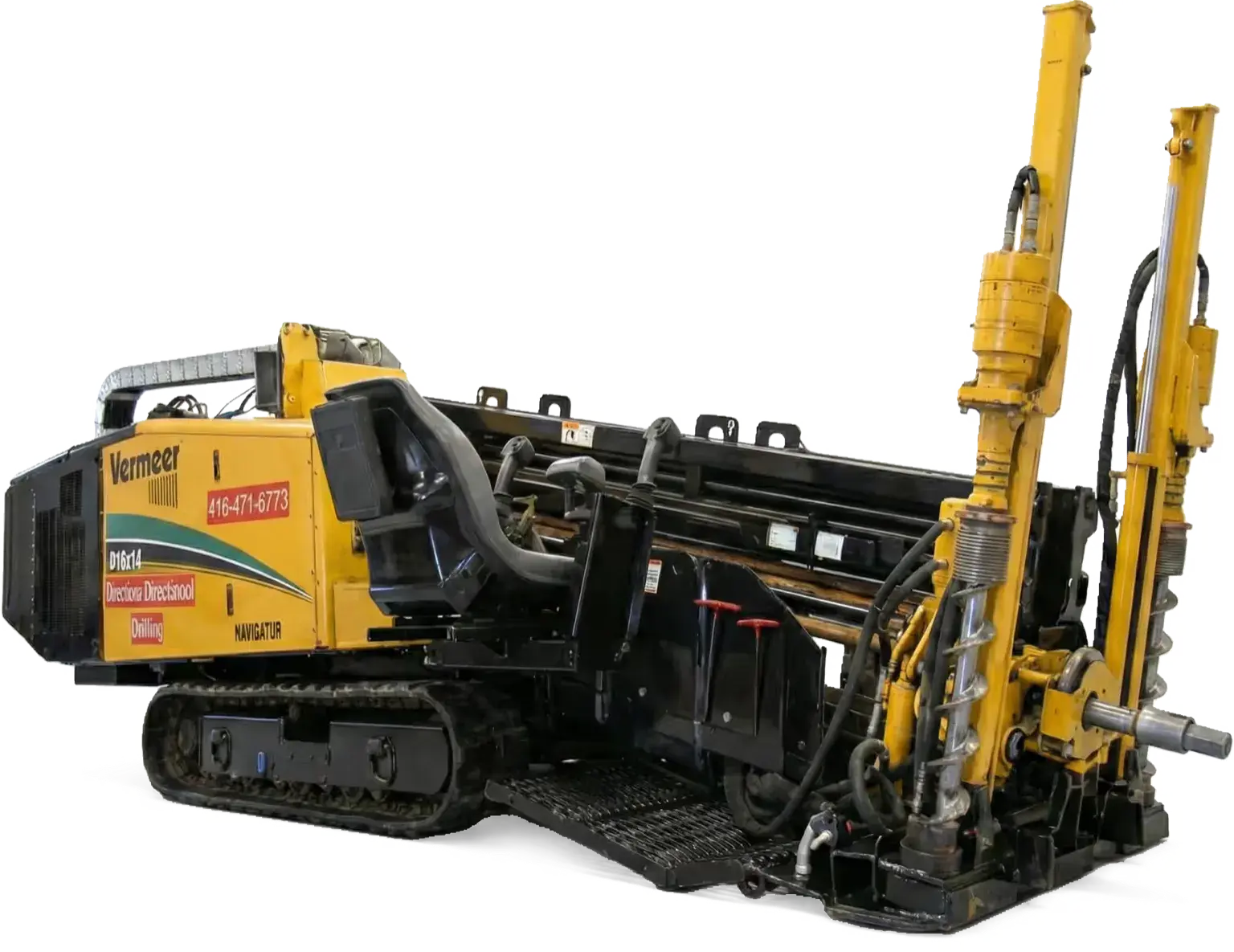
- Utility crossings under Steeles, Trafalgar, Winston Churchill, and Eighth Line in the Premier Gateway
- Interim arterial and environmental feature undercrossings for greenfield servicing
- Rail and road crossings on the Highway 7 / Guelph Street corridor
- Private service and fibre bores on rural Esquesing and Nassagaweya-side lots without scarring paddocks
From locates to restore on an HDD job
When the job has to open Monday and restore fast: confirm locates and private plant. Hydrovac daylight known utilities at the entry, exit, and any critical mid-path crossings. Match tooling and mud to till, sand lenses, weathered shale, or dolostone. Pilot, ream, and pull with continuous locate confirmation. Finish with a small, clean surface restore instead of a full-width scar.
“Hydrovac daylighting of existing plant before the drill bit turns is not extra. On congested municipal and industrial corridors it is how you keep a pilot hole from becoming a utility strike report.”
On Halton Hills HDD jobs, watch traffic windows on arterials, conservation setbacks, neighbour private wells on the fringe, and whether the bore path actually fits rock-capable tooling. Skip any of those checks and you will learn geology the expensive way.
When trenchless is the faster restore
Choose HDD when open cut would close a busy arterial, scar a tree line, cross a regulated feature, or force a week of pavement work for a single service. Mixed-ground shots through till, sand lenses, and weathered shale need continuous locate confirmation. Escarpment steps need rock-capable tooling and conservative pullback planning.
If the only need is exposure of live plant before a short mechanical repair, vacuum daylighting may be enough. When the run is long and the surface is precious, directional drilling does the install and soft dig protects the crossings.
Common Questions
When is HDD the faster restore choice in Halton Hills?
Choose horizontal directional drilling when open-cut would rebuild long asphalt, sidewalk, or finished landscaping across arterials, driveways, or multi-surface lots. Small entry and exit pits usually restore faster than full-width trenches.
How does Niagara Escarpment geology affect HDD in Halton Hills?
Overburden thickness and shallow rock change bore planning. Escarpment-edge and till-over-bedrock profiles need realistic depth, tooling, and contingency for mixed ground rather than assuming uniform clay all the way.
What utilities can you install with HDD in Halton Hills?
Water services, gas laterals, fibre and telecom conduit, and electrical conduit are common trenchless installs when alignment, locates, and permits support the bore path.
Do you daylight existing plant before an HDD bore in Halton Hills?
Yes when marks or risk justify it. Hydrovac exposure at critical crossings reduces strike risk before the pilot bore or pullback.
How disruptive is HDD to traffic and neighbours compared with open cut?
Most disruption is limited to pit locations, fluid management, and equipment staging. Crossing under a road or driveway usually beats lane-long trenching and multi-day surface rebuilds.
Are municipal permits required for Halton Hills road or boulevard bores?
Often yes. Road authorities may require permits, traffic control, and utility coordination. Corridor requirements should be identified before mobilization.
When is open cut still smarter than HDD in Halton Hills?
Very short shallow runs with easy restoration, clear plant, and soft ground can favour open cut. Long protected surfaces and congested crossings usually favour trenchless.
Services That Help in Halton Hills
Request a QuoteMore Local Guides
Wellhead Protection and Careful Utility Digs
How WHPAs, groundwater vs lake-fed regimes, and soft dig practices shape safe utility excavation across Halton Hills.
HDD for Guelph Industrial and Arterial Crossings
Horizontal directional drilling for Guelph industrial parks and arterial crossings when open cut would stall traffic and production.
HDD Under Busy Milton Growth Arterials
Horizontal directional drilling for Milton arterial and creek crossings while Boyne and Britannia-area growth keeps traffic pressure high.
Working in Halton Hills?
Based in Acton, we run trenchless, excavation, and utility crews across Halton Hills, Milton, Guelph, and nearby towns. Tell us what is underground (or what should be).